

When most people hear “LED wall,” they picture the same thing: a large screen behind a keynote stage in a ballroom. That application still has its place and remains one of the most effective ways to deliver clear visuals to a large audience.
But across many corporate, brand, and association events, LED is now being used in much broader ways. Instead of functioning only as a presentation surface, it’s increasingly becoming part of the architecture of the event itself. A communication tool, navigational aid, or a visual element that shapes how guests move through the space.
For producers and agencies working with high-profile clients, these deployments do something important. They extend the visual language of the event beyond the stage and into the spaces where guests arrive, move, gather, and connect. When that happens, the environment begins to feel larger than the room itself.
Here are several ways LED is being used to create that kind of experience.
Directional LED Towers
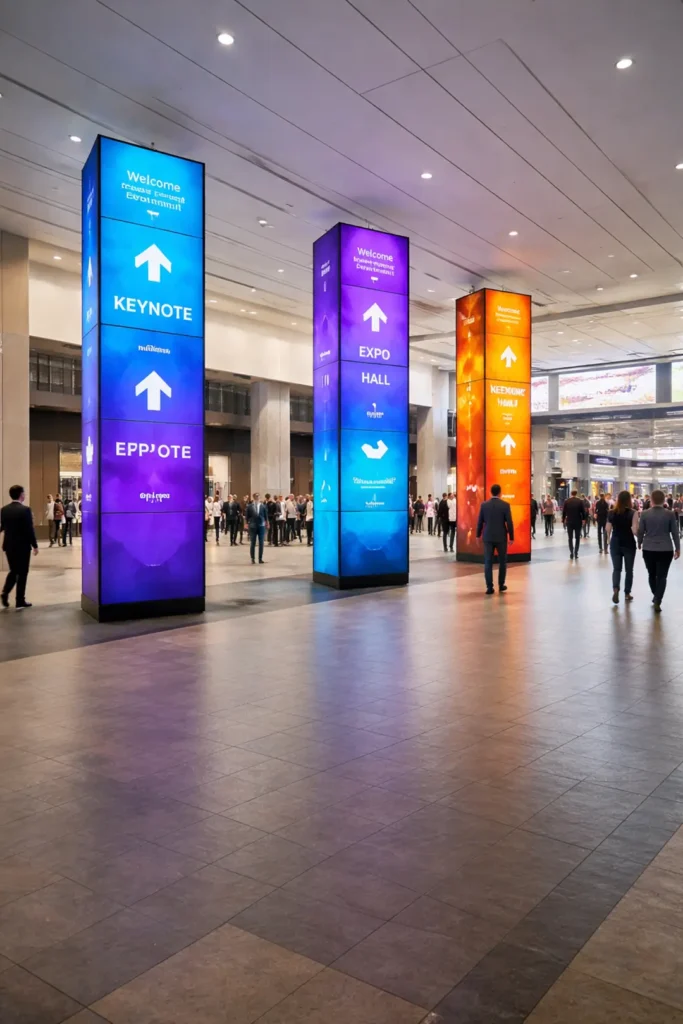
Wayfinding is usually treated as a purely functional problem. Signs point guests where they need to go, and that’s the end of the conversation. LED towers create an opportunity to turn those moments into part of the environment.
Vertical LED columns placed at key decision points, such as lobby intersections, hallway junctions, or entrances to major program spaces, act as illuminated landmarks within the venue. From across a large atrium or expo hall, they immediately draw the eye and help guests orient themselves.
Instead of static arrows, the content can evolve throughout the day. Arrival messaging can greet guests as they enter the venue. Directional guidance can appear between sessions. Sponsor recognition can rotate between programs. As evening events approach, the towers can transition into graphics that signal a shift in energy.
At scale, a series of towers begins to feel less like signage and more like a digital skyline inside the venue, quietly guiding guests through the environment.
Stacked LED Blocks
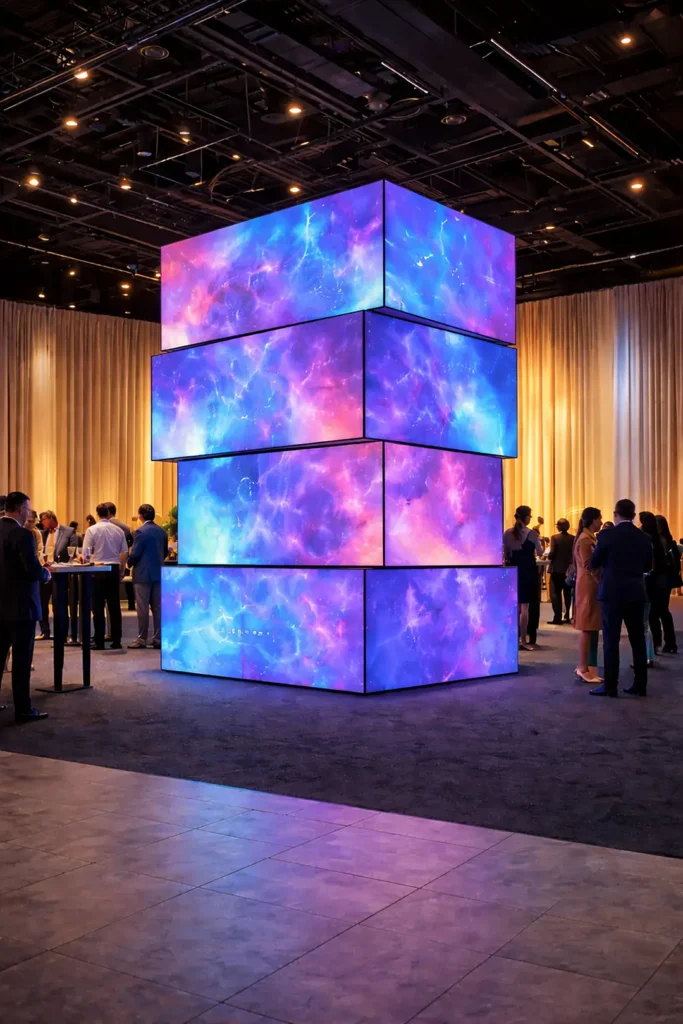
Most event rooms are visually flat. Walls, screens, and staging tend to exist on a single plane. Stacked LED cubes or rectangular blocks introduce something the room usually lacks: physical dimension. These modular structures create sculptural installations that feel almost architectural. When placed in lobbies, general session rooms, or expo environments, they become visual anchors within the space.
Each surface can carry different content, allowing the installation to evolve as the program unfolds. During arrivals, it might display kinetic brand animation. During a keynote, it can integrate directly into the scenic design of the stage. During networking breaks, the surfaces can shift to sponsor recognition. Later in the evening, the structure can transform into a lighting element that supports a reception or celebration.
When scaled up, stacked LED blocks can rise several meters into the air. The result can feel like a digital monument inside the room, something guests instinctively gather around, photograph, and remember.
Memorial and Recognition Walls
Not every LED installation needs to command attention. Sometimes its impact comes from creating a quieter moment within the event environment.
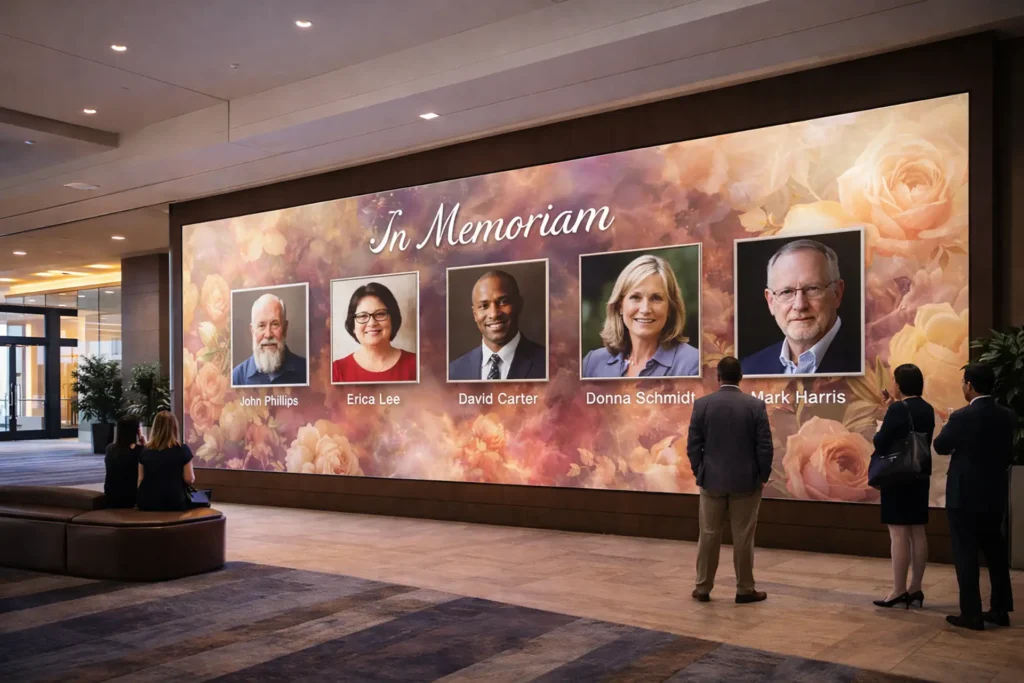
Memorial and recognition walls use LED surfaces to honor individuals, milestones, or community impact. When placed thoughtfully in a lobby or dedicated reflection space, they give guests an opportunity to pause and engage with stories that matter to the organization.
Subtle motion, portrait photography, and carefully paced transitions can transform the installation into something closer to a gallery than an event display.
Because the content can evolve throughout the event, the wall can serve different roles at different moments. In the morning, it may honor past leaders. Later in the program, it might celebrate award recipients or highlight community contributions. Handled with care, these installations create moments of meaning that stand apart from the pace of the main program.
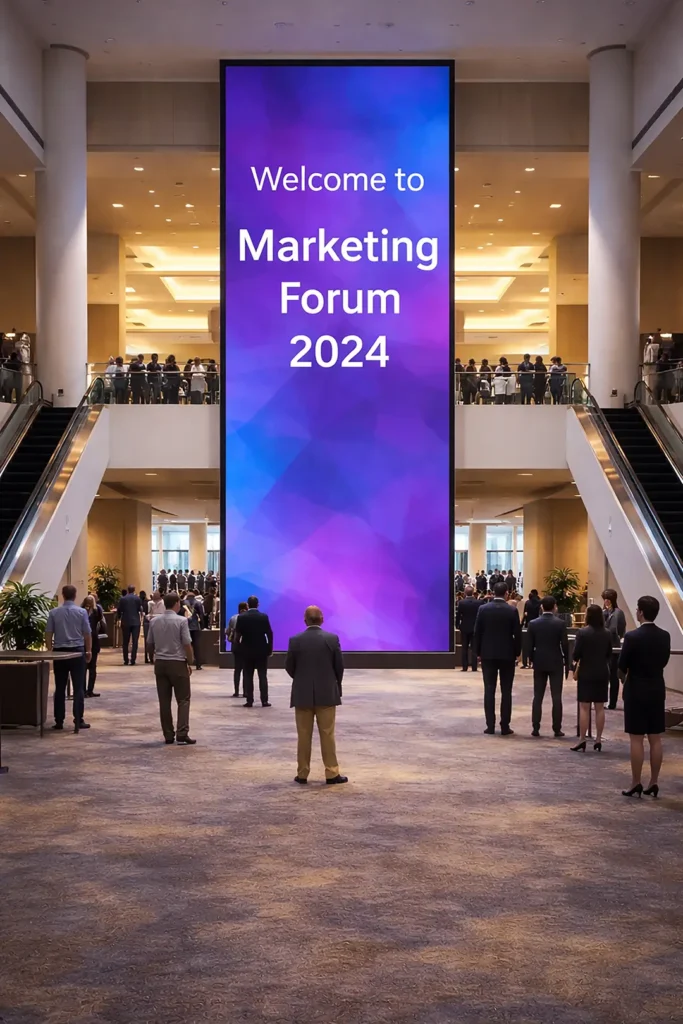
Digital Billboards Inside the Event Environment
In large venues, attention becomes a scarce resource. Digital LED billboards placed throughout the event environment provide a way to communicate at scale without adding visual clutter.
Large-format LED surfaces in lobbies, concourses, and gathering spaces act as visual anchors. They are bold enough to command attention but flexible enough to adapt throughout the day.
Content can highlight upcoming program moments, recognize sponsors, showcase social media highlights, or deliver major announcements as the event unfolds. Because the content can be scheduled and updated in real time, producers gain a communication tool that remains responsive even as schedules shift.
In larger venues, a network of these displays can make the entire facility feel connected to the event rather than simply hosting it.
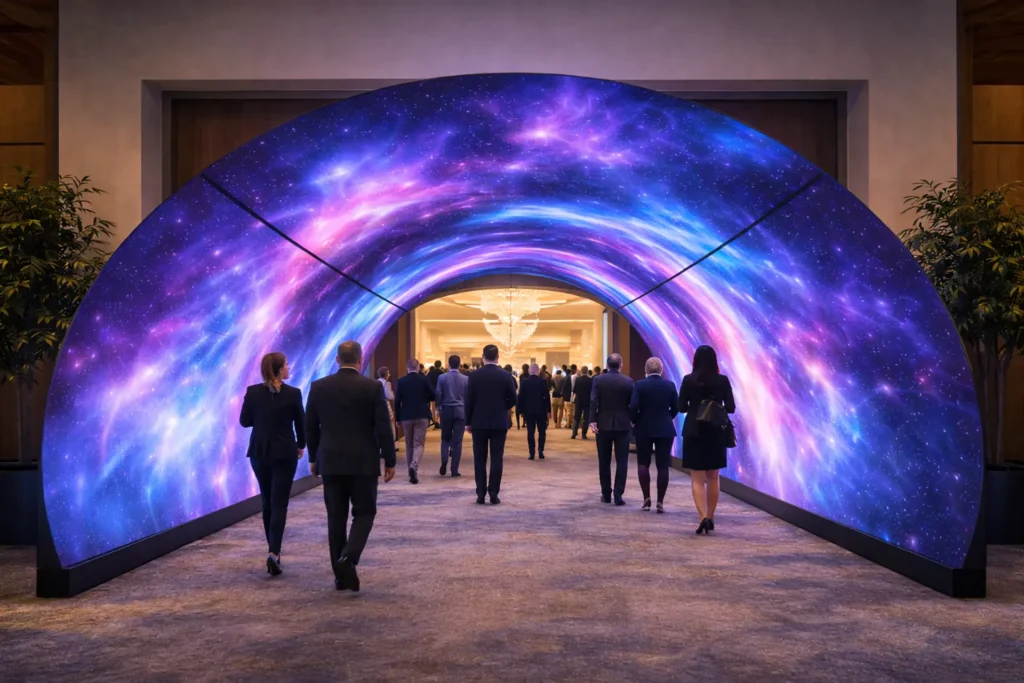
LED Tunnels (Flat or Curved)
Few LED applications create a stronger sense of arrival than an LED tunnel. Placed at major entry points such as registration entrances or the approach to a general session, these installations transform an ordinary hallway into something far more immersive.
Guests don’t simply walk into the event…they ARRIVE. Flat-panel tunnels create dramatic corridors filled with motion graphics, brand storytelling, or cinematic visuals that guide attendees toward the next space.
Curved LED tunnels take that experience further. By surrounding guests with light and motion on multiple sides, the environment begins to move with them. Color, animation, and imagery shift as people pass through, creating a moment that feels almost theatrical.
For product launches or major brand moments, these tunnels often become the first unforgettable impression of the event.
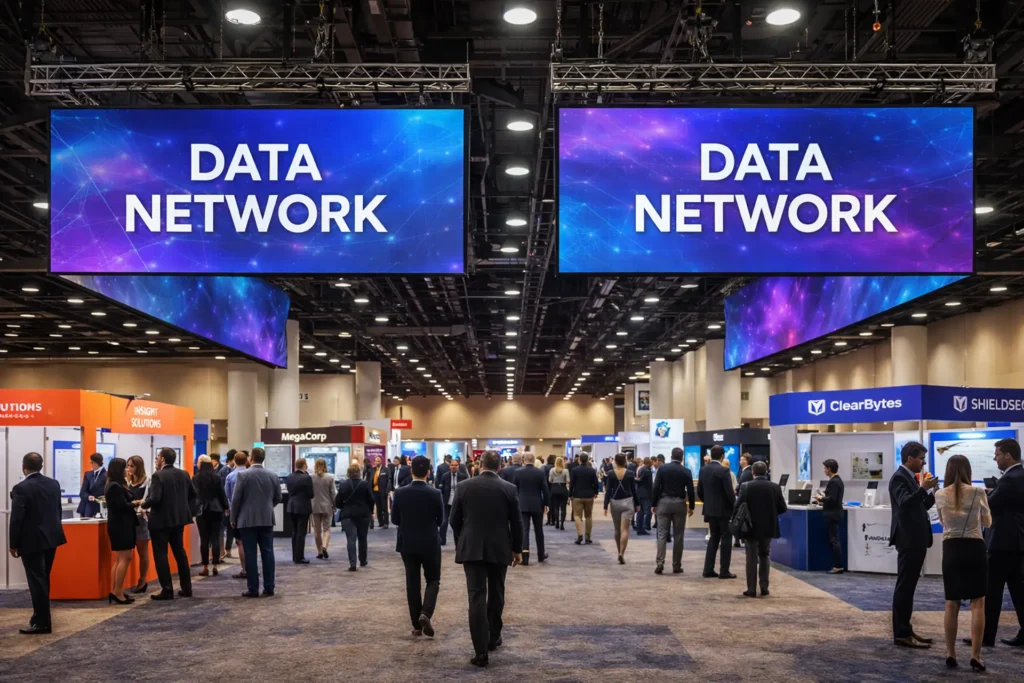
Double-Sided LED Banners in Expo Environments
Expo environments are designed for discovery, but they can also become visually overwhelming. Double-sided LED banners suspended above pavilions or booth clusters introduce elevated digital landmarks that help guests orient themselves within the space.
Unlike traditional hanging signage, these displays can rotate messaging throughout the day. Pavilion branding can transition into sponsor recognition, program reminders, or live event updates. Because the displays are visible from multiple directions, they function like digital beacons across the expo floor, helping guests navigate while giving sponsors meaningful visibility. In large exhibit halls, they often become some of the most valuable real estate in the room.
As live events continue to grow in scale and complexity, LED is evolving from a single screen into something closer to visual infrastructure. It allows producers and agencies to extend branding, storytelling, and communication across the entire venue rather than concentrating everything on the stage. The result is an environment that feels more cohesive, more dynamic, and often larger than the physical room itself.
And when these installations are thoughtfully integrated into the technical design of the event, they stop feeling like separate displays and they begin to feel like part of the architecture.