As attendees walk into an event, there is an excitement in the air … the upbeat music, bold lighting, and beautiful visuals; the hands shaking, high-fives, and joyous greetings; the hunt for the perfect seat or rush to grab a cup of coffee before the lights dim and the opening experience officially begins.
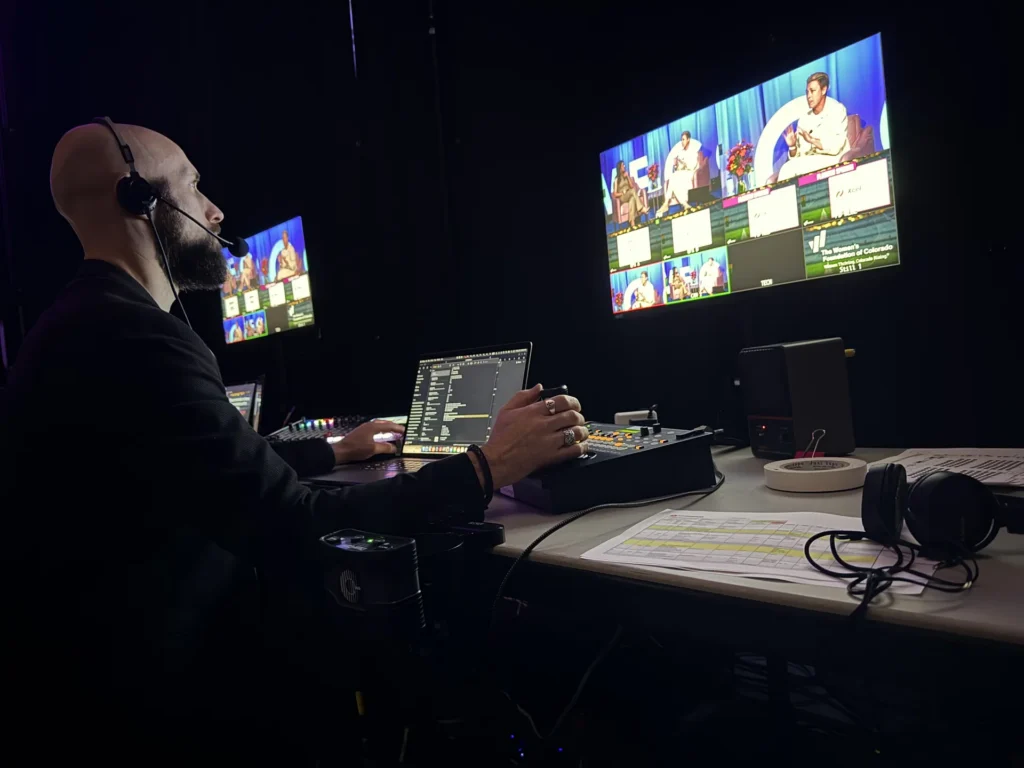
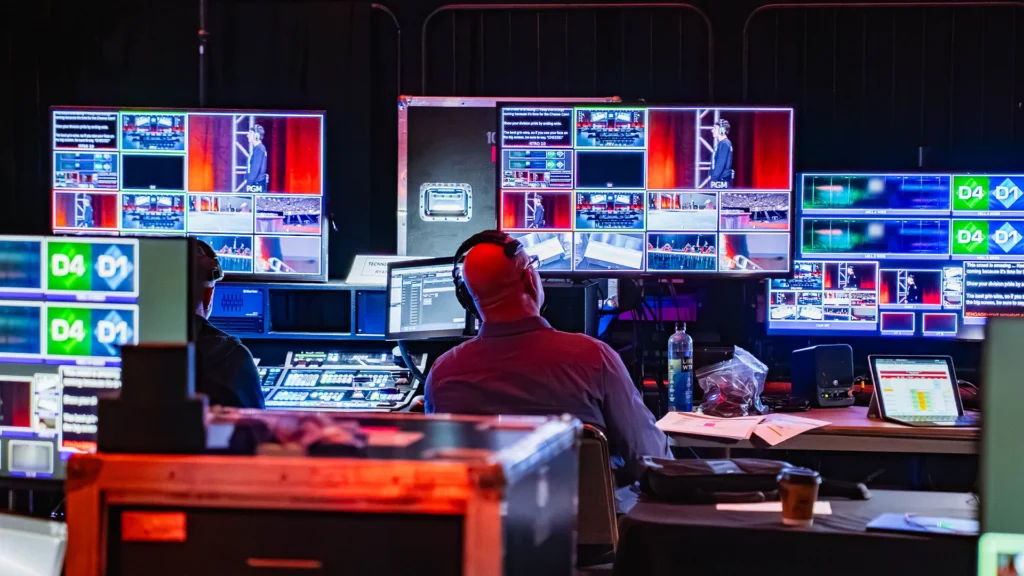
Backstage, however, is a different story. Surrounded by blinking lights, computer screens, and equipment packaging, the show crew sits, alert and calm, with their headsets over their ears, listening intently to every word.
If a member of the audience suddenly jumped on the crew communication channel, half the words may seem like foreign terms – but the show crew is communicating important information in a language they are all fluent in.
Like most industries, especially those that are quick-paced and rely on thorough communication, the live event industry has their own glossary of terms and words that is understood by anybody in production, but may be entirely unrecognizable to others.
Because cues are called rapidly, information is needed instantaneously, and the crew must work together at all steps of the production process, it’s vital that anybody closely involved with an event understands certain terms and slang. Failing to know basic terms can lead to significant misunderstandings, causing confusion and wasting time and money.
Luckily, we’ve compiled some top event terms that any event professional should know …
Event Terms Every Event Professional Should Know
Load-in/Load-out
The first and last things that take place on show site – loading equipment into (and later, out of) the event space.
Setup
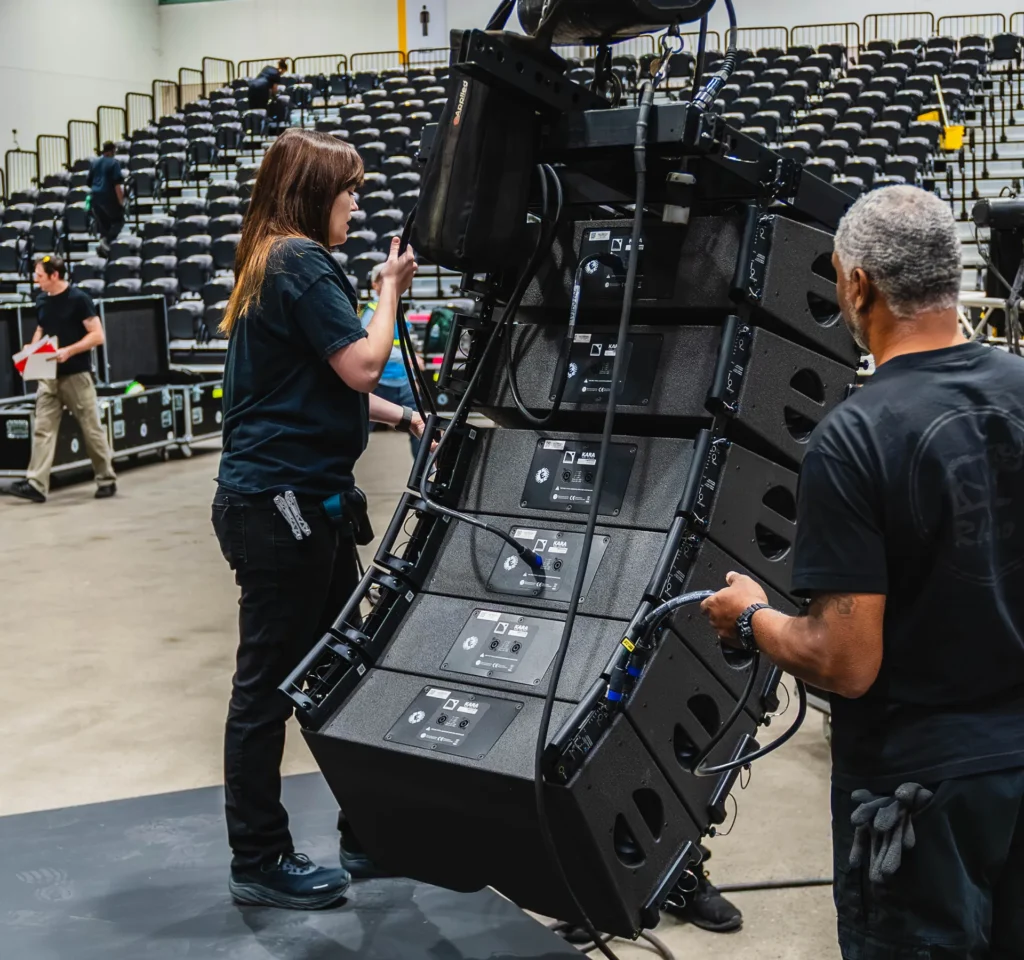
Not to be confused with load-in, setup is the actual process of installing audio, video, lighting, scenic, and any other equipment needed for the event. For shows with a large amount of equipment or extensive setup needs, it’s not uncommon for load-in to take place the afternoon prior to set up.
Strike
Strike takes place after the final session has ended, as the crew takes down all the equipment and gear in the event room, leaving it exactly as it was before load-in began. Load-out typically immediately follows strike.
Run of Show (ROS)
A detailed schedule that guides the event team through each part of a live event. It outlines timing, cues, transitions, and responsibilities so everyone can coordinate their work.
Room Drawings/CAD
Scaled plans that show how an event space will be arranged, including the placement of staging, seating, and production equipment. CAD refers to the computer-aided design software used to create these drawings.
Rigging Point
A designated location on a venue’s structure where rigging equipment connects to support a suspended load, such as lighting, speakers, or scenery.
Distro
Most commonly referring to power distribution, this high-amperage connection to the facility generator is distributed throughout the venue as needed.
Dimmer Beach
Traditional or “old school” lighting systems required dimmers, but modern deployments typically use distro instead. This is usually located backstage in a location that is out of the way but easily accessible.
Front of House (FOH)
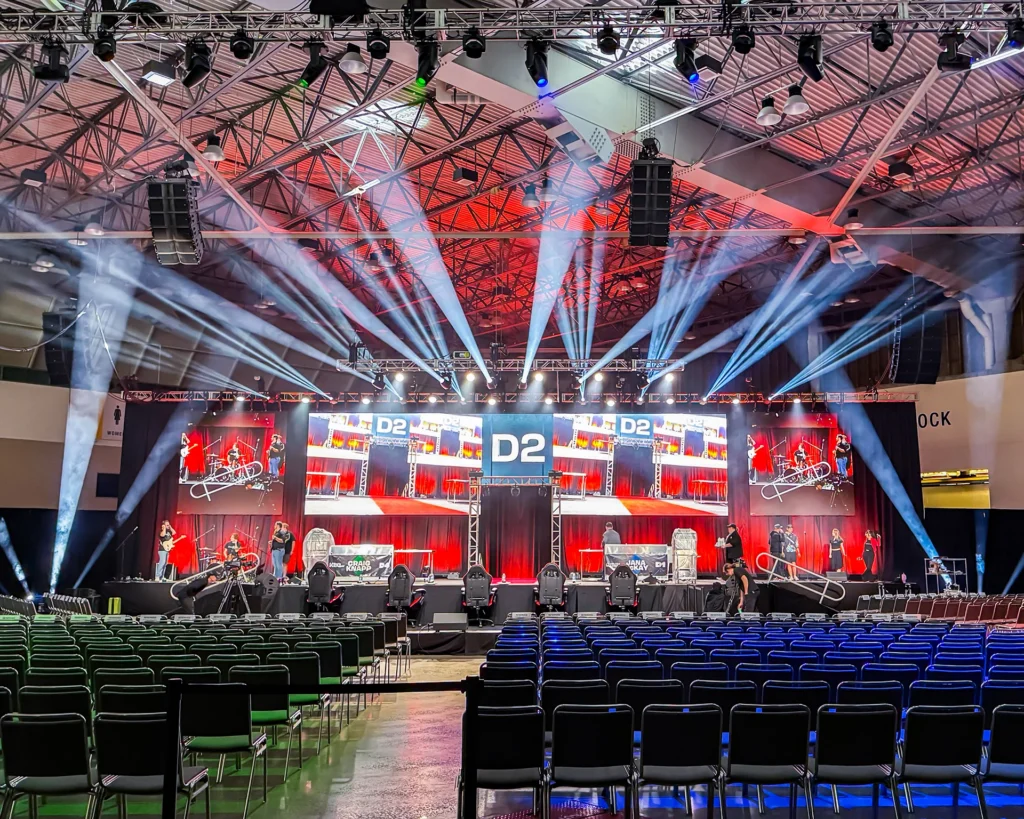
An area in the audience (usually towards the back of the room) where the show caller, audio engineer, and lighting designer perform their duties throughout the event.
Back of House (BOH)
Alternatively, this is where the majority of the show crew performs their duties. Back of House also serves as a staging area for talent and performers.
Video Village
Often the largest technical area of an event, and one that is crucial to its success. Video village is where the graphics, playback, camera shading, switching, and engineering positions work during an event.
IMAG (Image Magnification)
Live camera footage displayed on large screens within the venue, giving attendees a closer view of speakers, performers, and onstage details.
DSM
The downstage monitor (typically a flat screen whose size depends on the stage and venue) allows presenters to see their content, notes, speaker timer, and anything they may need to have eyes on during their presentation.
Airwalls
These removable dividers in large meeting spaces allow the room to be reconfigured into smaller sizes for sessions and breakouts alike.
Breakouts
Throughout the course of an event, there will often be smaller meetings which take place throughout the run of the meeting. These meetings tend to take place concurrently with different attendees attending different sessions. They are often more collaborative or feature more targeted, specific information.
Rider
Often featured as part of a contract with hired talent, keynote speakers, or entertainment, a rider outlines and specifies what the featured performer requires in addition to their fee. This includes technical needs, but also may include travel and dietary requirements.
DMC
The Destination Management Company, who specializes in booking venues, travel, meals, entertainment, excursions, and more! DMCs handle services that are typically not provided by a technical production partner, although they may work together closely on various aspects of the event.
Taking a bio or 10/1
If someone gets on the intercom and says they will be “taking a bio”, it doesn’t mean they’re taking a quick break to work on an autobiography. Similarly, a “10/1” isn’t referring to the time of day, or some kind of coordinates within the room. Taking a bio or 10/1 usually means the person is running to the bathroom … ideally before the show starts or in a moment they aren’t needed.
This can be confusing the first time you hear it – and if you don’t know what it means, it could leave you wondering when you’ll get a restroom break!
Summary
All industries have their own terms, slang, and short-speak, and the live event industry may rely on it more than most! If you’re looking to communicate more effectively with a show crew or event production partner, this list is a great place to start!
What is live event technical production?
Live event technical production covers the systems, equipment, crew, and planning needed to make the technical side of an event work. That can include audio, video, lighting, LED, rigging, labor, logistics, and system operation on site.
Why is event production terminology important?
Shared terminology helps agencies, producers, technical directors, and crews communicate quickly and understand which part of the plan is being discussed. It can also prevent confusion when reviewing schedules, venue access, staffing, and technical responsibilities.
What does event technical design and deployment include?
Event technical design and deployment begins with understanding the program, venue, schedule, and expected outcome. From there, the technical team designs the systems, develops the labor and logistics plan, prepares the equipment, and deploys everything on site.
When should an agency or producer involve a technical production partner?
The earlier the technical partner is involved, the more time there is to review venue requirements, schedules, budgets, and production needs. Encompass works as a technical partner for event agencies, producers, and technical directors without competing for creative direction or client relationships.
What technical documents are prepared before an event?
The documentation depends on the production but may include event CAD drawings, system designs, rigging plots, equipment lists, labor plans, production schedules, and logistics notes. Clear event CAD and technical documentation give the on-site crew a plan they can execute. Learn more about how those details fit into the Encompass Experience.
Does Encompass only support events in Colorado?
No. Encompass is a Denver-based live event production company and national event technical partner. The team supports corporate conferences and other live events throughout the United States.